.png)
discover singapore's underground music scene
Caitlyn Tan
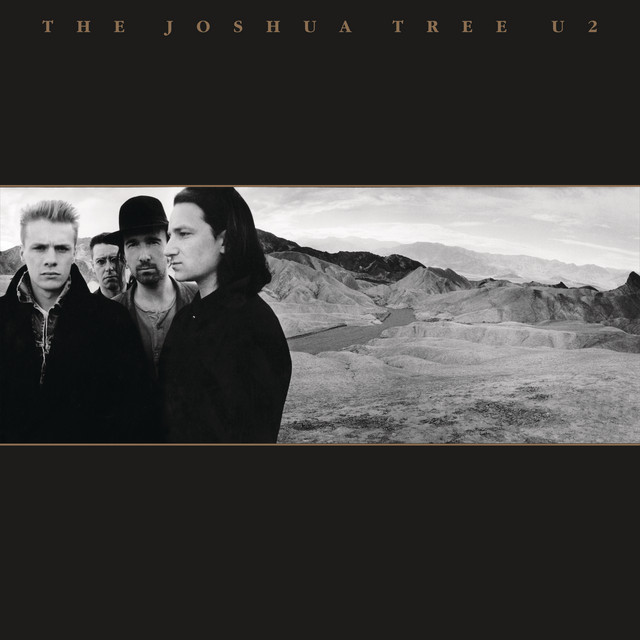
U2’s critically acclaimed fifth studio album, The Joshua Tree, catapulted the Irish rock band into global superstardom. A Joshua Tree is a prominent symbol of resilience and wonder, offering hope in a world of chaos. The name "Joshua tree" was given to the plant by Mormon settlers in the 19th century, who thought its outstretched branches resembled the biblical Joshua raising his hands in prayer or pointing the way to the Promised Land. This warm song is only one of the few examples of U2’s artistry, effectively highlighting its strong spiritual influence, and the Joshua tree is a metaphor for beauty and faith surviving in a harsh world. This ideology aligns with the overall mystery and tone of the album, searching for something spiritual in the dark, hazy and political world.
A nostalgic, rhythmic melody opens when “Where The Streets Have No Name” begins, the pulse-like build-up and steadily intensifying drum beat, evoke the sensation of running through a vast, open landscape, a mysterious open road with no certain direction, having “no name”. The lyrics I wanna feel sunlight on my face / I see the dust cloud / Disappear without a trace convey a sense of hope, for better days, and intense longing for problems to disappear. It is a yearning for clarity and renewal, the sunlight symbolising new beginnings, and the dust cloud disappearing representing past troubles vanishing, leaving behind a clean slate. The feeling of warm peace, the emotion of subtle appreciation, the hope welling up within you — who wouldn’t want to leave behind their struggles and start afresh? “I wanna take shelter/ From the poison rain/ Where the streets have no name” One would imagine ‘poison rain’ to be dyed with a dark, intimidating midnight black, haunting purple or maybe even blood red, striking its helpless victims with every bullet that is a raindrop, thus symbolising the relentless downpour of life that rains down on one. Thus, “taking shelter” shows seeking comfort and protection from the inescapable harm that is unpredictable and all around just like “rain”. This highlights the survival instinct and fighting spirit within U2 to strive for peace and stability in times of pain, almost as if encouraging its listeners too, to cultivate the young sapling of hope within them to seek safety and continue living.
The album continues with the iconic, well known “I Still Haven’t Found What I’m Looking For”, a deeply spiritual and intrinsic track, embodying a sense of unfulfilled spiritual desire, representing a search not solely for material or earthly satisfaction but for something transcendent. “I have held the hand of the devil / It was warm in the night / I was cold as stone / But I still haven’t found what I’m looking for” articulates a feeling of incompleteness, even the moments that seem to offer comfort: the warm “hand of the devil” not being what someone spiritually “cold as stone” needs. The harsh contrast between ‘warm’ and ‘cold' encapsulates the jarring uncertainty and anxiety that overcomes the lyricist in life, thus connecting with listeners on a personal and emotional level. The lyric speaks to a common human experience: the realization that not all that feels good is truly good. “You broke the bonds and you loosed the chains / Carried the cross of my shame / Of my shame/ You know I believe it” U2 has always blended faith with music, and this lyric in particular reflects the praise and adoration for something spiritual and above human comprehension. However, the song is not purely religious, it is a broader commentary on the human condition and its relentless, ongoing journey towards peace and fulfillment.
“With or Without You” and “Running to Stand Still” are both intensely emotional, slow-burning and intimate songs, exploring the confusing yet imprisoning feelings of yearning. The pace of “With or Without You” slows noticeably compared to the previous two tracks, hinting a more romantic tinge to the feel of the song. “Sleight of hand and twist of fate/ On a bed of nails she makes me wait/ And I’ll wait without you” expresses a unconditional yet agonising devotion, the imagery of a “bed of nails” shows how love is painful and all-consuming, revealing the complexities of human emotion and self-sacrifice. “Running to Stand Still” quickly changes the mood of the album once again, the melody toned back drastically, and the quiet vocals and almost indistinguishable background melody immediately shows slowing down, or being stranded somewhere alone. The song describes the struggles of a heroin addiction, and the feelings of hopelessness, running to escape but still being stuck in the same crushing cycle.
Picture a vivid blue sky, clouds drifting above lush greenery, a moment of calm before the storm. Hold that image as you listen for the next track.“Bullet The Blue Sky” opens with a more catchy, action movie style rhythm, the bold instrumentals and loud vocals convey a darker, more ominous tone. The song represents U2’s condemnation of how the U.S. projected military and political power into other nations. “And I can see those fighter planes / Across the mud huts where the children sleep / Through the alleys of a quiet city street” , The contrast between the violence that the fighter planes represent and the innocence that the sleeping children represent highlights the brutal intrusion of war into peaceful, vulnerable spaces. U2 is openly criticising the political systems around them, and it is almost a call to action for change.
While “Bullet The Blue Sky” dominates the stage with deep, dark beats,“One Tree Hill” introduces a surprisingly new tune to the overall melancholy album, with a rhythmic and catchy beat, and light musical tone. By weaving in short and simple lyrics, the writer sends a straightforward message, a touching tribute to his late friend. Lines like “I’ll see you again when the stars fall from the sky / And the moon has turned red / Over the One Tree Hill” express a quiet hope for reunion beyond death, blending personal grief with spiritual imagery. When “Exit” starts playing, there is an immediate feeling or indescribable sadness, longing and regret. The background noise adds to the anxiety and anticipation of the song. The raw, pain filled vocals adds to the chaotic buildup, reflecting inner torment and suffering, efficiently causing the listener’s heart to wrench painfully in overwhelming sympathy “His hand in his pocket / His finger on the steel / The pistol weighed heavy / His heart he could feel” is a dark, psychologically intense portrait of violence, inspired in part by American noir and real-life killers. A dragged out coda emphasises the need to reflect and rethink the system, and adds to the intentionally uncomfortable vibe of the song. Additionally, the sense of rhythm the repeated phrase ‘His…in/or…’ creates, outlines the daunting fear that consumes the writer when facing such violence, dominating his five senses and driving him into a state of deep panic, tugging at the listeners heartstrings.
The Joshua Tree closes with “Mothers of the Disappeared” , a short, last message to offer closure to the entire roller coaster of emotions and heavy messages in the album. It is a tribute, dedicated to the women (especially in Argentina and El Salvador) whose children were “disappeared” by military regimes, often with U.S. support. The sparse arrangement and ghostly tone reflect grief, loss, and injustice in a deeply human way, invoking a sense of yearning in the listener. It's a quiet but devastating political statement — one of U2’s most subtle and powerful songs. The gentle, ambient textures, soft percussion, and echoing guitar lines evoke a sense of mourning wrapped in dignity, creating a soundscape that feels safe, tender, and respectful “We hear their heartbeats/ In the trees our sons stand naked / Through the walls our daughters cry / See their tears in the rainfall” is not just a simple song lyric, but a claim and declaration that their memories are not forgotten, and will always be an enduring trauma of those left behind.
In essence, U2’s The Joshua Tree is a monumental exploration of spirituality, political unrest, and human emotion, crafted with a blend of soaring melodies and poignant, often painful, lyrics. The album’s admirable depth comes from its ability to merge intimate personal reflections with global political commentary, making it both universally relatable and fiercely bold. From the haunting political message of “Bullet the Blue Sky” to the personal grief in “One Tree Hill” and the quiet mourning in “Mothers of the Disappeared,” U2 invites us on a journey that reflects both the darkness and the hope inherent in the human experience. Ultimately, The Joshua Tree is not only a reflection of U2’s artistry but also a profound call to reflect on the world’s complexities and strive for something better, brighter, and more compassionate.