.png)
discover singapore's underground music scene
Lee De Kuan and Suha Fakrudin
13 Feb 2025
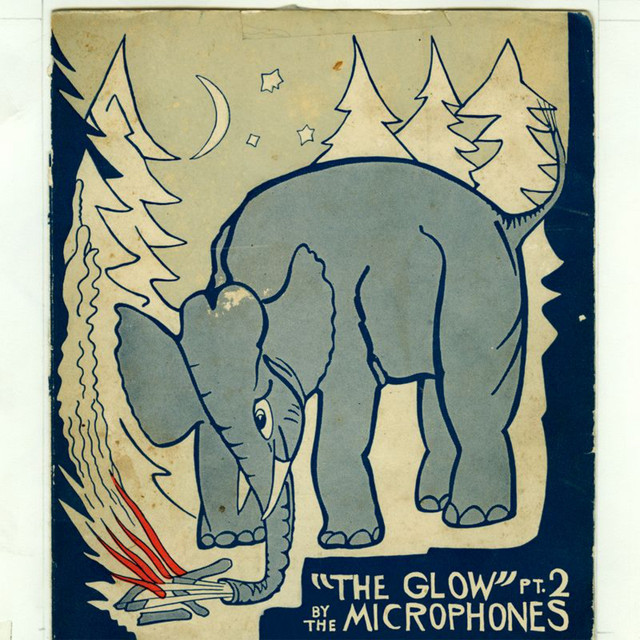
Few albums feel as alive as The Glow Pt. II. It breathes, shifts, decays, and rebuilds itself across its expansive 20-track runtime. Released in 2001 under The Microphones, the moniker of Phil Elverum, this album stands as a landmark in lo-fi and experimental folk. It’s an album of contradictions: intimate yet cosmic, structured yet chaotic, fleeting yet eternal.
The Glow Pt. II carries listeners through crashing waves of distortion, hushed acoustic reflections, and abstract, poetic storytelling that feels both personal as a diary entry and as vast as the natural world it evokes. At its heart, the album explores impermanence, the transience of love, memory, and even identity. Through layered, textured production and impressionistic lyrics, Elverum mirrors the unpredictability of nature in a way that feels profound and utterly human.
Where the album thrives is in its fearless sound design. Unlike traditional lo-fi records that lean into minimalism, Elverum embraces a kind of lo-fi maximalism, turning distortion, tape hiss, and abrupt shifts in dynamics into essential elements in his musical vocabulary.
The opening track “I Want Wind to Blow” sets this tone perfectly. It begins with a quiet, delicate acoustic melody and soft, murmuring vocals, only to erupt into pounding, reverberating drums that feel like they could shake the walls of the cabin where the album was recorded. This dynamic contrast permeates the album — moments of tender vulnerability are suddenly consumed by tidal waves of sound, mirroring the emotional turbulence described in the lyrics.
One of the album’s defining traits is its unconventional song structures and transitions. Tracks bleed into one other, collapse upon themselves, or vanish abruptly, creating a dreamlike cinematic effect. “The Moon,” one of its standout tracks, begins as a wistful folk song before descending into a chaotic blend of cymbals, tape loops, and fragmented vocals, only to vanish into eerie echoes. Tracks like “The Mansion” and “Map” abandon traditional songwriting altogether, layering reverb-soaked drums and distant vocals to create abstract movements rather than songs.
The final track, “My Warm Blood,” pushes this abstraction further. Beginning as a straightforward song, it devolves into an extended, droning outro—a hypnotic, pulsating hum that fades into near silence. The effect is unsettling yet comforting, as if the album itself is dissolving, much like the fleeting emotions it explores. This track also transitions into Elverum’s next project, Mount Eerie, continuing the metaphorical and emotional expansion initiated in The Glow Pt. II.
Nature imagery is central to the album’s lyricism. Wind, mountains, water, and the moon become metaphors for internal struggles, blurring the line between the personal and the cosmic. In “I Want Wind to Blow,” the wind represents a desire for transformation: “I want wind to blow, my clothes off me, sweep me off my feet, take me up and bring me back.” Here, the wind becomes a force of erasure and renewal—a longing to be carried away and reborn.
Although The Glow Pt. II was not a commercial success upon release, it has since gained cult status, influencing a generation of indie and experimental artists. Its raw production, unconventional structures, and deeply personal lyricism have inspired acts like Big Thief, Sufjan Stevens, and early Bon Iver.
Timeless and emotionally resonant, The Glow Pt. II feels like flipping through an old, weathered journal where the ink has begun to blur. It defies traditional songwriting and embraces unpredictability, moving like a force of nature—sudden, overwhelming, and fleeting.
It lingers long after the final note fades. It’s not just something you listen to; it’s something you experience.