.png)
discover singapore's underground music scene
Anusha Biswas
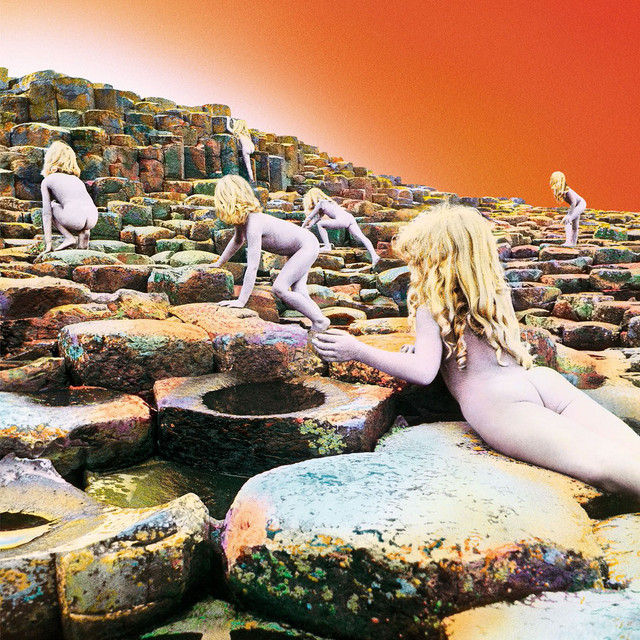
It seems as if Led Zeppelin’s four eponymous albums are what comes to mind when one is told to envision the British band’s discography. And yet, Houses of the Holy seems to be the most authentic representation of these rock-and-roll pioneers. Incorporating elements of psychedelia, reggae, and folk, the album promises droning, fluctuating guitars, and bass riffs which can only be described as ‘crunchy,’ versatile drums and vocalist Robert Plant’s hypnotising and yet alluring vocals.
The title pays homage to the various venues Led Zeppelin performed at, and their ‘larger than life’ stage presence during these shows. Seen as a place of communal experience for the band and their fans, almost a ‘sacred’ place. The album opens with jangly guitars and bass, and rolling drums with Plant crooning, “You don’t know what you’re missing now.” Through the album's 8 songs, each spanning between 3 to an impressive 7 minutes, his point is proven. Truly, overlooking this quintessential aspect of their musical journey would be a misled oversight.
The varied experimentation on this record comes hand-in-hand with the tart humour in some of the songs. According to Page himself, the song was written after Beatles guitarist George Harrison jokingly commented on Led Zeppelin’s lack of ballads. As if a direct reply to the famous guitarist’s humour, the track runs for an admirable 7-and-a-half minutes. The Rain Song features acoustic strumming before culminating into a glorious finale of warm chords. Moreover, the track features guitarist Jimmy Page’s Mellotron and ARP synthesiser, each adding to the song’s ethereal effect. Reminiscent of sweet young loves, Plant warbles, “You are the sunlight in my growing//So little warmth I've felt before” as groovy pianos begin to kick adding to the crescendo mood. This isn’t the first occurrence of lyricism comparing one’s lover to natural beauties, as seen in Dancing Days.
Dancing Days is in the most succinct fashion, a pure embodiment of early rock. Punctuated by scintillating strumming on Page’s 12-string Fender Electric XII, and impassioned drumming, Plant belts, “You are my flower, you are my power, //You are my woman who knows.” Likening one’s lover to both a thing of such fragility and beauty and that which invigorates and thunders is quite a high form of flattery and endearment. It seems that Plant’s partner is assured of this and very well knows the effect she has on him, perhaps even to an overpowering degree, as expressed in Over the Hills and Far Away.
In this track, Led Zeppelin pays tribute to both their early Folk and Heavy Metal origins. Opening with the gentle plucking of an acoustic guitar segues into an empowering and sharp bass rendition, as Plant reiterates, “Hey lady, you got the love I need//Maybe more than enough.” Drummer John Bonham’s work seems most impressive in this song, with his signature hits that seem to ‘shake the earth.’ Bassist John Paul Jones's sharp tones pierce through the vocals, drums and guitar, providing the track with an undeniable funk feel. Overall, this track seems to be the most developed and well-executed on the record.
The Crunge is transitioned to smoothly, immediately hitting the listeners with bluesy riffs. The lyrics parallel the energetic sonic atmosphere created, as shown through Plant’s raspy, almost whiny droning, singing, “And when she looks me in my eye//She's my baby, Lord, I wanna make her mine.” Admittedly, the track is the most confused, filled with claims of not needing respect from anybody, before ending with a dazed-sounding Plant pandering about, unsuccessfully looking for a ‘confounded bridge.
Yet, the album can’t be all frivolity and warbling lyrics about love. In No Quarter, one is met with resonating, glassy and yet eerie Rhodes piano, processed through VCS3. The drums are drenched in reverb, and the lyrics seem to bemoan a story of Vikings- not a new interest for the band, just look back to Led Zeppelin III’s Immigrant Song. Plant dropped his high vocal register to fit the distorted feel of the track, seeming to be on the verge of tears when singing “Walking side by side with death//The devil mocks their every step.” One would be used to his high wailing, now abandoned for low-pitched, haunting ohhhhhhs.
On the last track, the group quickly regains their spunk, with the vocals back at their highest. The closing track is a salute to two very important things to Plant, each on either a personal or public level. The metaphor of the ocean represents the ‘sea of heads’ seen at Led Zeppelin’s concerts, as can be inferred from the lines, “Singing to an ocean, I can hear the ocean's roar//Play for free, I play for me, and play a whole lot more, more.” He expresses his gratitude for the band’s legions of fans who chant along during concerts, and also conveys his love for his job, how he really plays for himself and everyone else too. On the other hand, he reveals his love for his own daughter, just three years old at the time of release, singing “Now I'm singin' all my songs to the girl who won my heart//She is only three years old, and it's a real fine way to start.” This heartwarming line serves as a gateway to the end of the album, as bright, clear guitar tones fade away, leaving one’s heart full and ears buzzing.