.png)
discover singapore's underground music scene
Lee De Kuan & Suha Fakrudin
13 Feb 2025
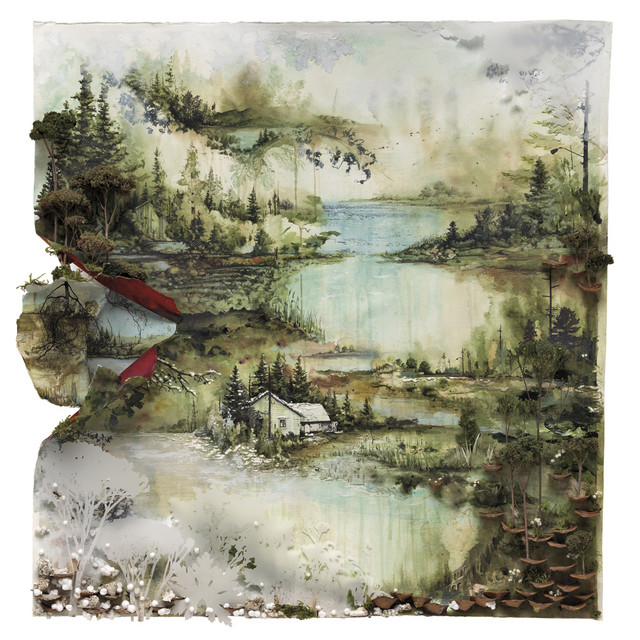
In 2011, Bon Iver, Bon Iver marked a dramatic reinvention for Justin Vernon. Following the stark, lonely beauty of For Emma, Forever Ago, recorded in isolation in a Wisconsin cabin, Vernon expanded his sonic palette with an album that is lush, cinematic, and deeply immersive. Like an impressionist painting, Bon Iver, Bon Iver, is hazy, evocative, and textured, with emotions bleeding into one another like watercolours.
More than just a follow-up, this album is a transformation. Vernon abandons the minimalism of folk for a grandeur that blends folk, rock, jazz, and ambient textures into a soundscape that is vast yet intimate. At its heart, it remains deeply personal, but now the confessional solitude of his earlier work gives way to abstract fragments — layered, obscure, and open to interpretation. This is an album about places, both real and imagined, as well as the emotions and memories they evoke. Each track is named after a location, serving as a literal and metaphorical journey through time, memory, and identity.
If For Emma was defined by its stripped-down, raw sound, Bon Iver, Bon Iver stands as its lush counterpart. Vernon crafts each track with a dense, multi-layered approach, weaving horns, strings, pedal steel, synths, and intricate drum patterns together. The result is a self-contained world, with each song unfolding like a scene from a long-forgotten dream.
The album opener, “Perth,” sets the tone immediately. It begins with a relentless, militaristic drum pattern before blossoming into a crescendo of soaring electric guitars, layered horns, and Vernon’s signature falsetto. The track ebbs and flows like a tide, drawing the listener into its vast ocean of sound. In contrast, “Holocene” is delicate, featuring fingerpicked acoustic guitar wrapped in shimmering ambient textures. Vernon’s voice drifts, drenched in reverb, drifts weightlessly, embodying the album’s signature contrast: grandeur and intimacy intertwined.
Unlike conventional folk or rock albums, Bon Iver, Bon Iver doesn’t rely on standard verse-chorus structures. Instead, its songs flow organically, feeling more like evolving landscapes than fixed compositions. “Minnesota, WI” is a prime example of this fluidity. It opens with a distorted, funk-infused bass groove before morphing into ethereal falsetto harmonies. The song resists settling, shifting unpredictably like the fragmented nature of memory. Similarly, “Hinnom, TX” grounds itself in Vernon’s unusually deep register before dissolving into an ambient outro, each transition feeling like the turn of a page in a dream journal.
Each track’s title serves as an emotional landmark rather than a literal one. These places, real or symbolic, act as vessels for reflections on time, relationships, and the fleeting nature of life. Take “Holocene”, named after both a geological epoch and a bar in Portland. In which Vernon sings, “And at once I knew I was not magnificent.” This captures the feeling of being small in the face of something much larger. The song isn’t just about a specific place; it’s about the sensation of being overwhelmed by memory, beauty, and transience. Other tracks, like “Calgary”, evoke nostalgia and longing through cryptic lyrics that feel like fragmented conversations: “Don’t you cherish me to sleep? Never keep your eyelids clipped.” Rather than telling clear narratives, his words function as abstract poetry, their meaning secondary to their evocative power.
Much of the album’s lyrical strength lies in how Vernon uses words, not just for their meaning. Many lines feel phonetically driven, chosen as much for their sonic qualities as their meaning. For example, “Towers” features lines like: “For the love, comes the burning young / From the liver, sweating through your tongue”. These lyrics don’t follow conventional storytelling, but they are chosen for their texture rather than their explicit meaning. This approach heightens the album’s dreamy, impressionistic atmosphere.
Among Bon Iver, Bon Iver’s many breathtaking moments, “Holocene” emerges as the emotional and artistic pinnacle. It is not only one of Bon Iver’s most celebrated songs but arguably their magnum opus, a perfect synthesis of the band’s thematic, lyrical, and sonic ambitions. Its hypnotic guitar pattern, ambient textures, and Vernon’s falsetto vocals create an almost weightless atmosphere. The central lyric, “And at once I knew I was not magnificent”, resonates deeply, encapsulating the tension between humility and awe. As the track builds, its celestial soundscape evokes a sense of standing on the world's edge, reflecting on one’s place in the universe.
Bon Iver, Bon Iver wasn’t just a successful sophomore album; it was a reinvention of Bon Iver’s sound and identity. Garnering the Grammy for Best Alternative Album, it cemented Justin Vernon as one of indie music’s most innovative artists and inspired a wave of artists blending film with electronic and orchestral elements. Its influence is echoed in records by artists like Sufjan Stevens (Carrie & Lowell), The National (I Am Easy to Find), and even Vernon’s later work, 22, A Million.
Listening to Bon Iver, Bon Iver is like drifting through a dream. It doesn’t tell a straightforward story but captures fleeting moments of beauty, loss, and nostalgia. Its lush, layered soundscapes invite the listener into a world that feels deeply personal and universal. It’s an album about places — real, imagined, and remembered. It’s about moments that can never be fully recaptured but can always be revisited through music. More than a collection of songs, Bon Iver, Bon Iver is an experience, one that invites you to get lost in its depths, again and again.